
Your smart TV is watching you — the surveillance economy inside your living room
Your 65-inch 4K television didn't cost $400 because of manufacturing efficiencies; it cost $400 because you are the recurring billable asset that pays for the glass. For every hour of prestige drama or mindless reality television you consume, your Smart TV transmits roughly 1,000 "fingerprints" o...

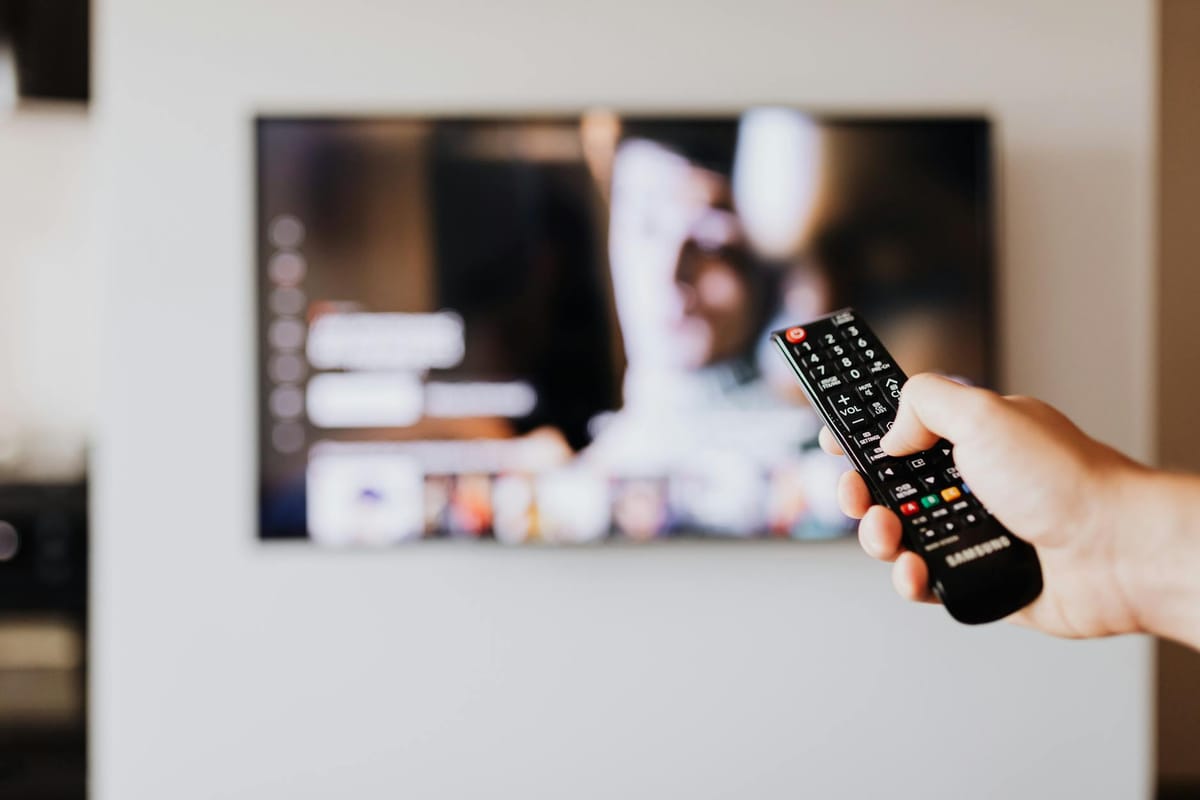
Your 65-inch 4K television didn't cost $400 because of manufacturing efficiencies; it cost $400 because you are the recurring billable asset that pays for the glass. For every hour of prestige drama or mindless reality television you consume, your Smart TV transmits roughly 1,000 "fingerprints" of the pixels on your screen back to corporate servers, creating a second-by-second log of your life behind closed doors.
The hardware business is a corpse, and data is the necromancy keeping it upright. In 2023, Roku reported that its "Platform" revenue—a polite euphemism for advertising and data licensing—accounted for 86% of its total gross profit, while its actual hardware players often sold at a negative margin. We are no longer buying electronics; we are inviting sophisticated surveillance nodes to occupy the most intimate corners of our homes in exchange for a subsidized price point on a brighter backlight.
👁️ The Silent Fingerprint
The technology driving this extraction is called Automatic Content Recognition, or ACR. It works by capturing small snippets of pixels or audio frequencies from whatever is playing on the screen, regardless of the source. Whether you are watching a local news broadcast via an antenna, a Netflix stream, or a pirated DVD of a 1990s sitcom, the ACR software identifies the content and timestamps it. This isn't a theory; it is the core business model for Vizio’s Inscape data division and LG’s Ad Solutions wing.
Vizio was the canary in the coal mine for this economy. Back in 2017, the company paid $2.2 million to settle charges with the Federal Trade Commission after it was caught tracking 11 million TVs without explicit consent. The settlement barely slowed the momentum. Today, Vizio's Inscape provides "highly glass-level" data to advertisers, allowing them to see exactly when a viewer switches from a CNN broadcast to a video game, or if they muted the TV during a specific political advertisement.
The precision is terrifying to privacy advocates but intoxicating to Madison Avenue. If a TV manufacturer knows you watched a documentary about hiking and then saw three ads for the Ford F-150, they can sell that "exposed" profile to Ford. When you later walk into a dealership or search for a truck on your phone, the loop is closed. The TV isn't just a screen; it is the primary bridge between your offline physical presence and your digital marketing identity.
💰 The Hardware Loss Leader
Walk into a Best Buy and look at the prices of 4K displays. Adjusted for inflation, a high-quality television is cheaper today than a standard-definition CRT was in the 1990s. This isn't just about Moore’s Law. It’s about the "Post-Purchase Monetization" strategy that CEOs like William Wang of Vizio have championed. When the margin on a physical television is less than 5%, the real profit has to come from the five to seven years of data harvesting that follows the initial sale.
Samsung and LG have effectively transformed into advertising companies that happen to manufacture high-end panels. LG’s "webOS Re:New" program is a blatant attempt to extend the shelf life of their surveillance software, promising five years of updates to older TVs. This isn't a gift of longevity to the consumer; it's an insurance policy for LG's ad revenue. They need your TV to remain a functional data terminal for as long as possible.
The economics are undeniable. Roku’s average revenue per user (ARPU) has climbed steadily, hitting over $40 annually in recent filings. While $40 might sound small, multiply that by 80 million active accounts and add the fact that the marginal cost of collecting this data is near zero. The "dumb" TV is dead because it was a financial dead end. A TV that doesn't report back to its creator is a wasted opportunity in a world where attention is the only currency that matters.
🔍 The Middlemen of the Living Room
Most consumers have never heard of Samba TV or Alphonso (now owned by LG and rebranded as LG Ad Solutions), but these companies are the plumbing of the surveillance economy. They provide the SDKs—software development kits—that live inside the TV's operating system. These firms don't just know what you watch; they know who you are. By matching your TV’s IP address with the IP addresses of your smartphone and laptop, they create a "household graph."
This graph allows for "cross-device attribution." If you see an ad for a Peloton on your TV, Samba TV can tell Peloton that your iPhone later visited their website. This level of tracking was once reserved for the wild west of the internet, but it has now conquered the living room. It turns the passive act of watching television into an active, trackable interaction. You aren't just a viewer; you are a lead in a funnel.
Ashwin Navin, the CEO of Samba TV, has been open about the scale of this operation. His company claims to have a "global panel" of tens of millions of opted-in households. The "opt-in" process, however, is often buried in a 40-page terms-of-service agreement that pops up during the initial setup of a new TV. Most users, eager to get to their first Netflix stream, click "Accept All" without realizing they are signing away the privacy of their domestic habits.
📡 The Audio Trap and the Mic
It’s not just the pixels. Many smart TVs are equipped with microphones for voice search, and some even have cameras for gesture control or video calls. Samsung famously made headlines in 2015 when its privacy policy warned users not to discuss sensitive information in front of their TV because the "voice recognition" feature could transmit those conversations to third parties. While the company later clarified that it wasn't "spying" in the traditional sense, the technical capability remains a latent threat.
The microphones are often listening for "triggers"—not just your voice commands, but audio watermarks in commercials. An advertiser can embed a high-frequency tone in a TV ad that is inaudible to humans but recognizable by your smartphone or your Smart TV. When the TV hears the tone, it signals to the network that the ad was successfully "delivered" to a human ear. This creates a feedback loop that makes the traditional Nielsen rating system look like a stone-age relic.
The creep factor reaches its zenith with biometric data. Patents filed by major TV manufacturers describe systems that can detect how many people are in a room, their approximate age, and even their emotional reaction to the content on the screen. If the TV sees you smiling at a Coca-Cola ad, that is a data point worth its weight in gold. We are moving toward a world where the TV watches us more closely than we watch it.
📉 The Death of the Private Home
Historically, the home was a sanctuary—a place where the influence of the marketplace stopped at the front door. The Smart TV has effectively demolished that boundary. By turning the living room into a data-mining operation, manufacturers have commercialized the very act of relaxation. There is no "off" switch for the surveillance economy; even if you disconnect your TV from the Wi-Fi, many models are designed to search for open hotspots or wait for a reconnection to dump their stored logs.
This surveillance has political implications as well. During election cycles, ACR data is used to micro-target "persuadable" voters. If a campaign knows you watch a lot of hunting shows and local news, they can hit you with specific Second Amendment ads that your neighbor, who watches "The Daily Show," will never see. This creates a fragmented reality where two people in the same apartment building are living in entirely different information silos, curated by their TV's data harvesting.
The data doesn't stay with the TV manufacturer either. It is sold to data brokers like Experian and Acxiom, who combine it with your credit card history, your voter registration, and your location data. The result is a 360-degree profile of your existence. Your TV knows you're struggling with debt before your family does, simply because of the late-night predatory lending ads you've been "exposed" to and haven't skipped.
⚖️ The Illusion of Choice
Defenders of this system argue that consumers want lower prices and personalized ads. They claim that the data collection is the "fair price" for the 85-inch theater experience. But for a choice to be meaningful, it must be informed. The dark patterns used in Smart TV interfaces—where the "No" button is greyed out or hidden behind three sub-menus—suggest that manufacturers know exactly how much of a "choice" they are actually offering.
Even if you are a tech-savvy user who manages to disable all the tracking features, you are often left with a hobbled device. Some TVs will nag you with pop-ups every time you turn them on, asking you to "complete setup" by connecting to the internet. Others will disable key apps like YouTube or Disney+ unless you agree to the latest privacy policy updates. It is a soft-power coercion that makes opting out a full-time job.
The regulatory response has been sluggish. While the CCPA in California and the GDPR in Europe provide some guardrails, they are often outpaced by the sheer technical complexity of the ACR ecosystems. A "Do Not Track" request on a browser doesn't necessarily translate to a "Do Not Fingerprint My Pixels" request on a Samsung Tizen OS. The manufacturers are playing a game of jurisdictional whack-a-mole, staying one step ahead of the legislators.
🚀 The Shoppable Future
The next phase of this economy is "T-Commerce," or shoppable TV. Companies like NBCUniversal and Roku are already testing "shoppable ads" where a QR code or a "Press OK to Buy" button appears during a show. If a character in a Netflix original is wearing a specific pair of Nike shoes, the ACR software identifies the item, and a small overlay allows you to buy it instantly with the credit card already on file with your TV provider.
This is the ultimate dream of the surveillance state: the total collapse of the gap between desire and purchase. It turns the TV into a 24/7 vending machine that knows what you want before you do. In this future, the content is merely the bait to keep you in front of the sensor. The "Golden Age of Television" wasn't about the quality of the scripts; it was about the quality of the data the scripts could generate.
As we move toward 8K resolution and even larger screens, the fidelity of the surveillance will only increase. The TV will become a sophisticated biometric scanner, an emotional barometer, and a primary gateway for the global ad-tech stack. The living room is no longer yours; it is a leased territory in the surveillance economy, and you are paying for the privilege of being watched.
The insight for the next decade is clear: hardware is becoming a mere skin for the software that owns your habits. In a world where the screen is free, the viewer is the ultimate product. The real cost of your Smart TV isn't on the receipt—it's the permanent record of every pixel you've ever seen, sold to the highest bidder in the milliseconds it takes for you to blink.
ð¬ Better Videos: AI-powered creation with Canva Pro — Free trial available