Why Grocery Prices Keep Going Up Even When Inflation Slows Down
Walmart generates $40 million in revenue every single hour, yet the price of its Great Value brand milk remains 20% higher than 2019 levels even as dairy commodity costs cratered by 15% last year. While the Federal Reserve pats itself on the back for bringing headline inflation down to a manageab...

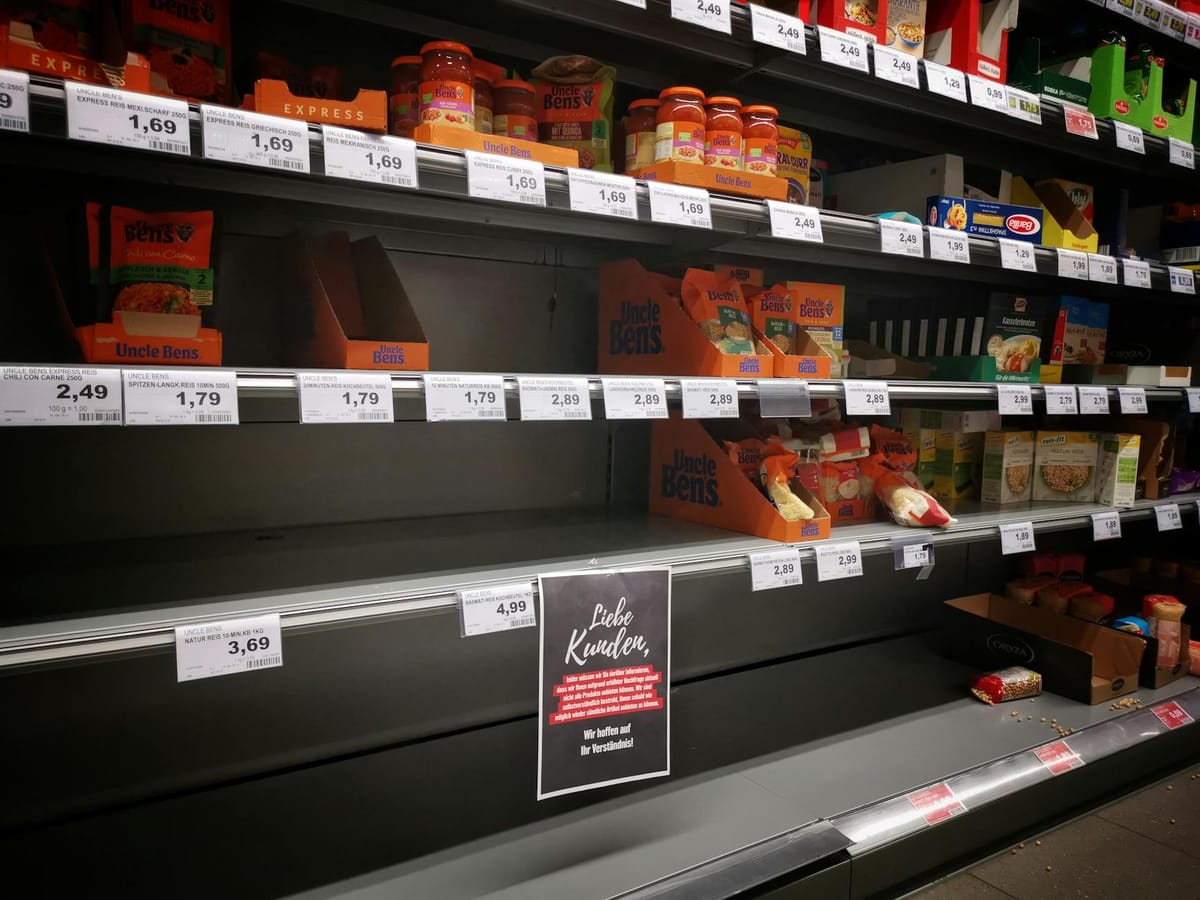
Walmart generates $40 million in revenue every single hour, yet the price of its Great Value brand milk remains 20% higher than 2019 levels even as dairy commodity costs cratered by 15% last year. While the Federal Reserve pats itself on the back for bringing headline inflation down to a manageable 3%, the average American family is still staring at a grocery bill that feels like a sustained mugging.
The disconnect is not a glitch in the matrix; it is a calculated feature of the modern food economy. To understand why your cereal costs $7.50 while the price of wheat is hitting multi-year lows, you have to look past the "supply chain" excuses that dominated 2021. The reality is a cocktail of asymmetric pricing, extreme market consolidation, and a phenomenon economists call "pricing courage" that has permanently shifted the floor of what we pay to eat.
📉 The Disinflation Delusion
The most common misunderstanding in modern economics is the difference between disinflation and deflation. When Jerome Powell talks about inflation cooling, he isn't saying things are getting cheaper; he’s saying they are getting more expensive at a slower rate. If a loaf of bread goes from $2 to $4 in two years, and then stays at $4.10 the following year, the "inflation" on that bread has dropped from 100% to 2.5%, but the pain at the register remains exactly the same.
Consumers are waiting for a price correction that isn't coming because the "new normal" has already been codified into corporate balance sheets. Since 2020, the Consumer Price Index for food at home has surged by over 25%. For a family spending $800 a month on groceries four years ago, that is a $2,400 annual tax on their existence that no amount of "inflation cooling" will ever give back. We are living through a permanent step-change in the cost of living, not a temporary spike.
This is particularly visible in the "Rocket and Feather" effect. Retailers are incredibly efficient at raising prices like a rocket the second their input costs—like diesel or fertilizer—tick upward. However, when those same input costs drop, retail prices drift down like a feather, if they move at all. This lag isn't accidental; it’s a period of pure margin expansion that retailers use to fatten their bottom lines before competition forces a fractional discount.
🚀 The Era of Pricing Courage
During the 2023 earnings season, a phrase started appearing in investor calls with startling frequency: "Pricing courage." CEOs from PepsiCo to Nestlé realized that after decades of being afraid to raise prices for fear of losing market share, the pandemic provided the perfect cover to test how far they could push the consumer. They found that the consumer, bolstered by stimulus savings and a tight labor market, was surprisingly resilient.
PepsiCo is a masterclass in this strategy. In late 2023, the company reported that its volumes—the actual amount of soda and chips sold—were declining. In a sane world, falling demand leads to lower prices. Instead, PepsiCo’s revenue increased because they raised prices by double digits. They effectively traded volume for margin, betting that people would rather pay more for a smaller bag of Doritos than stop eating them altogether.
This "courage" is backed by the fact that the food industry is no longer a collection of competing brands, but a series of interconnected oligopolies. When three companies control 80% of the coffee market, they don't need to explicitly collude to keep prices high. They simply watch each other’s price tags. If Nestlé doesn't blink, JDE Peet’s has no incentive to lower its prices either, and the consumer is left with a choice between high prices and no coffee.
🤝 The Merger Monopoly
The proposed $24.6 billion merger between Kroger and Albertsons is the final boss of grocery consolidation. If the FTC allows this deal to go through, a single entity will control more than 5,000 stores across the United States. While Kroger CEO Rodney McMullen argues that the scale will allow them to lower prices, history suggests the exact opposite happens. When competition dies, the incentive to provide value dies with it.
In many rural and suburban areas, a Kroger-Albertsons entity would be the only game in town. Without a nearby competitor to keep them honest, there is nothing stopping a store manager from ticking up the price of milk by ten cents every month. When you multiply that by 5,000 stores and 30,000 products, you aren't just looking at inflation; you’re looking at a massive transfer of wealth from American kitchens to Cincinnati boardrooms.
The consolidation isn't just at the retail level. Look at the "Big Four" in meat processing: Tyson Foods, JBS, Cargill, and National Beef. Together, they control 85% of the grain-fed cattle slaughtered in the U.S. In 2021, while ranchers were going bankrupt because they couldn't get a fair price for their cows, Tyson’s net income soared by 47%. The bottleneck in the middle of the supply chain is where the profit is being squeezed out, and that middle is owned by a handful of giants.
📦 The Shrinkflation Trap
If you feel like you're carrying fewer groceries for more money, you aren't imagining it. "Shrinkflation" has become the preferred method for companies to hide price hikes in plain sight. General Mills recently reduced the size of its "Family Size" cereal boxes from 19.3 ounces to 18.1 ounces while keeping the price the same. To the casual shopper, the price hasn't "gone up," but they are paying 6% more per ounce of Cheerios.
This is a psychological war of attrition. Most consumers are "price sensitive" but "volume blind." We remember that a jar of peanut butter costs $4.99, but we rarely notice when the indentation at the bottom of the jar gets slightly deeper, or the weight drops from 18 ounces to 16.3. It’s a stealthy way to maintain the illusion of price stability while aggressively hollowing out the value proposition.
Retailers like Target and Walmart have also leaned into this by pushing their private label brands. While "Good & Gather" or "Great Value" might be cheaper than the name-brand alternative, the margins for the retailer are often higher. By positioning their own brands as the "affordable" choice, they capture more of the profit while still keeping the baseline price higher than it was pre-pandemic. It is a win-win for the corporation and a lose-lose for the pantry.
🌾 The Supply Chain Ghost
For two years, every price hike was blamed on "supply chain disruptions." Container ships were stuck in Long Beach, diesel was $5 a gallon, and fertilizer was scarce due to the war in Ukraine. Those were legitimate pressures. However, those pressures have largely evaporated. Global shipping rates have returned to 2019 levels. Diesel prices have stabilized. Fertilizer costs have plummeted. Yet, the price of a box of pasta remains stubbornly high.
The "ghost" of the supply chain lives on as a convenient narrative. Companies are loath to give up the "emergency" pricing they implemented during the height of the crisis. When Kraft Heinz or Mondelez International reports record-breaking gross margins, they are effectively admitting that their price increases outpaced their cost increases. They didn't just pass on the costs; they added a premium on top of the pain.
We are also seeing the impact of "just-in-time" inventory failures. During the pandemic, the lean supply chains that were designed for maximum efficiency proved to be incredibly brittle. Now, companies are building "just-in-case" inventory, which is more expensive to maintain. Those extra warehousing and storage costs are being passed directly to you, the consumer, as a "resiliency tax" that you never asked for and don't benefit from until the next disaster strikes.
👷 The Labor Lag and the Last Mile
While commodity prices have cooled, labor costs have remained elevated. This is often used as the final defense for high grocery prices. It is true that wages for retail workers and warehouse staff have finally begun to rise after decades of stagnation. However, labor typically accounts for only 10% to 15% of the total operating cost of a grocery store. A 10% increase in wages does not justify a 20% increase in the price of a gallon of orange juice.
The real labor cost isn't at the cash register; it’s in the "last mile" and the complexity of modern fulfillment. As more consumers shift to Instacart or curbside pickup, the cost of getting that loaf of bread to your door increases. Grocers are trying to subsidize their massive investments in automation and e-commerce infrastructure by keeping shelf prices high. You are paying for the robot in the warehouse every time you buy a bag of frozen peas.
Furthermore, the "Great Resignation" led to a massive loss of institutional knowledge in logistics. The inefficiency of training new staff and the high turnover in trucking has created a permanent friction in the system. This friction manifests as higher prices. When a truck sits idle because there isn't a driver, that cost doesn't disappear; it gets divided up and added to the price of every head of lettuce on that trailer.
⚖️ The FTC and the War on Gouging
Lina Khan, the chair of the FTC, has become the public enemy number one for big retail. Under her leadership, the commission has moved beyond simple antitrust and started investigating "unfair methods of competition" that include price gouging. The FTC’s recent report on grocery prices during the pandemic was a scathing indictment, noting that large grocers "accelerated and distorted" price increases to pad their profits.
The government is finally looking at "slotting fees"—the opaque payments that big brands like Coca-Cola pay to retailers to get the best shelf space. These fees make it almost impossible for smaller, cheaper competitors to break into the market. If a local soda maker can't afford the $50,000 fee to be at eye level, they end up on the bottom shelf or not in the store at all. This lack of "shelf-level competition" keeps the big brands in power and their prices high.
However, regulatory pressure is a slow-moving tool. By the time the FTC finishes an investigation or blocks a merger, the price increases have already been "baked in." The consumer's behavior has already adjusted. We have learned to accept that $5 is the price for a bag of chips. Even if the FTC wins a few battles, they are fighting against a corporate culture that has tasted record profits and has no intention of going back to the slim margins of the 2010s.
🔍 The Algorithmic Aisle
The future of grocery pricing isn't on a paper tag; it’s in an algorithm. Kroger and other major chains are rapidly rolling out Electronic Shelf Labels (ESLs). On the surface, these seem like a way to save labor on changing price tags. In reality, they are a gateway to "dynamic pricing"—the same model used by Uber and airlines. Imagine the price of ice cream going up on a 95-degree day, or the price of turkeys rising in the three hours before Thanksgiving dinner.
This "Uber-fication" of the grocery store is the ultimate goal for retailers. By using loyalty card data, stores know exactly what you buy and how much you are willing to pay. If the data shows you are a "brand loyalist" for a specific type of organic milk, the store can theoretically show you a higher price than the person behind you who is a price-sensitive bargain hunter. It is personalized inflation, driven by big data and executed in real-time.
This level of transparency—for the retailer, not the consumer—eliminates the last vestige of traditional market competition. When prices can be adjusted by a computer in a millisecond based on local demand and competitor pricing, the "market price" becomes whatever the algorithm thinks you can bear without walking out. It turns the grocery store into a casino where the house always knows your limit.
🔮 The Forward-Looking Insight
The hard truth is that we are not going back to 2019 prices. The "cooling inflation" narrative is a sedative designed to make us accept a permanently higher cost of survival. While politicians argue over tax credits and interest rates, the real economy is being reshaped by a few dozen CEOs who have realized that food is the ultimate inelastic good. You can skip a new iPhone; you cannot skip dinner.
The next phase of this crisis won't be headline-grabbing price spikes, but a steady "premiumization" of the entire grocery store. Basic goods will be rebranded as "artisanal" or "enhanced" to justify $8 price points, while the truly affordable options will be relegated to lower-quality, highly processed substitutes. The grocery store is becoming a two-tiered system: a luxury experience for those who can ignore the receipt, and a nutritional minefield for everyone else. If you're waiting for the "invisible hand" of the market to bring prices back down, you're going to be waiting a very long time; that hand is currently busy counting record profits.
ð§ Build Your AI Business: Guides, templates, and tools at SochiLab