
Best VPN Services for Privacy and Speed in 2026

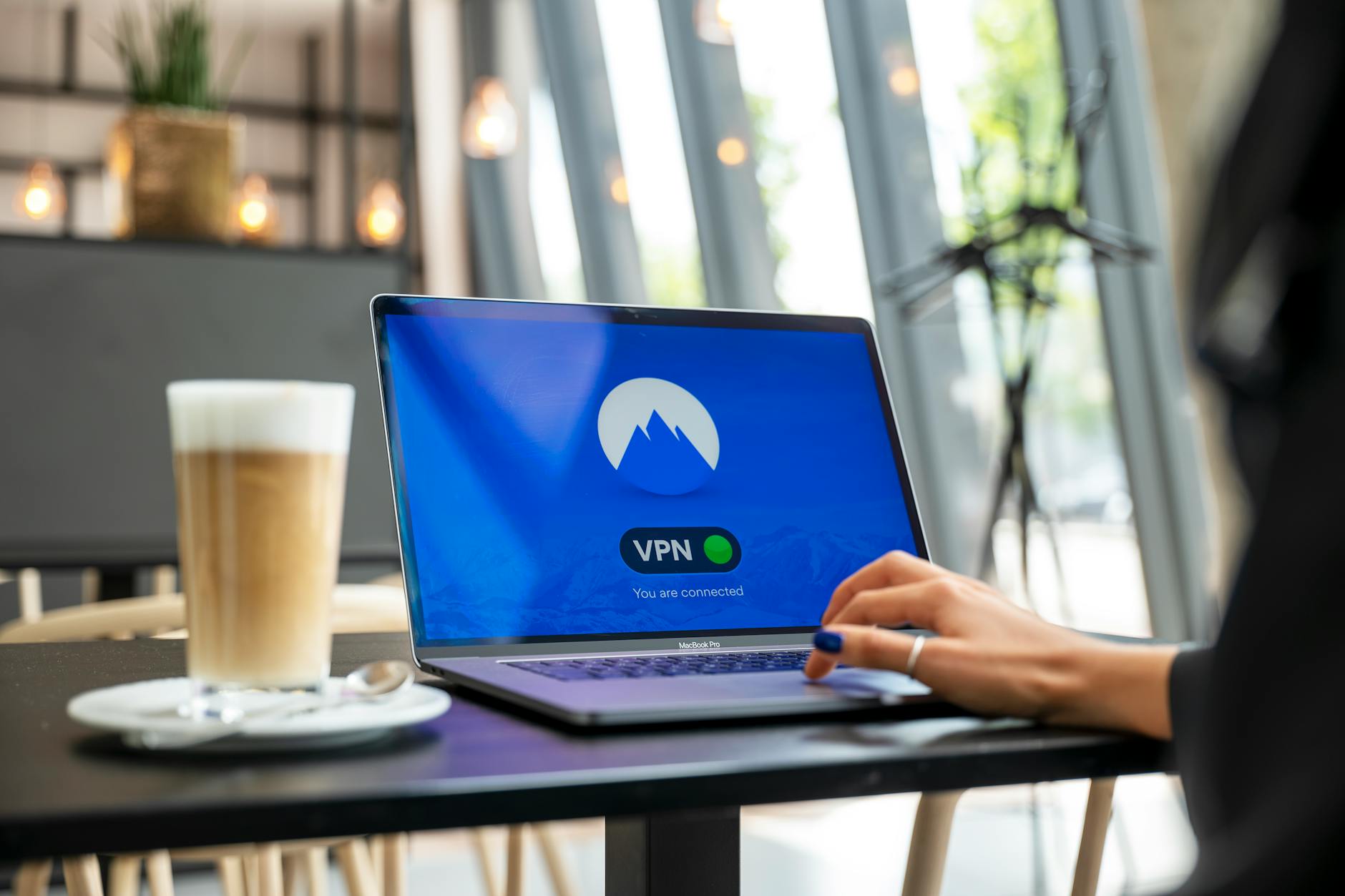
The digital perimeter has shifted. In 2026, the internet is no longer a static library of pages but a dense, interconnected mesh of AI-driven data streams and persistent biometric tracking. For the modern professional, the choice of a VPN is no longer a niche technical preference; it is a foundational pillar of operational security. As we navigate a landscape where 10Gbps home connections are the standard and post-quantum decryption threats are moving from theoretical papers to active government laboratories, the tools we use to shield our identity must be both invisible and impenetrable. This is not just about unblocking geo-restricted content anymore. It is about maintaining a sliver of digital sovereignty in an era of total data transparency. The following analysis explores the elite tier of services that have adapted to these high-stakes requirements, balancing extreme privacy with the blistering speeds required for the modern global workspace.
💡 The 2026 Connectivity Reality: Why Privacy Is a Moving Target
The landscape of 2026 is defined by the rise of pervasive AI surveillance. Internet Service Providers (ISPs) and third-party data brokers no longer rely solely on your browsing history; they utilize deep packet inspection (DPI) powered by large language models to analyze metadata patterns. Even if your traffic is encrypted, the timing, size, and frequency of your data packets can reveal your activities with 94% accuracy. This is where a high-end VPN becomes essential. By obfuscating not just the content but the very nature of the connection, these tools prevent automated systems from building a behavioral profile of your professional life.
Furthermore, we are witnessing the dawn of the post-quantum era. State actors are currently engaging in Harvest Now, Decrypt Later (HNDL) tactics, where they intercept and store encrypted data today in hopes of cracking it with future quantum computers. The best VPN services in 2026 have already implemented Post-Quantum Cryptography (PQC) using algorithms like Crystals-Kyber. For a professional handling sensitive intellectual property or financial data, using a service that lacks PQC is essentially leaving a time-delayed back door open for future exploitation.
🔑 The Architecture of Modern Privacy: Beyond Simple Encryption
Privacy in 2026 is a structural requirement, not just a policy statement. The industry has moved toward RAM-only server architectures, where every piece of data is wiped the moment a server loses power. Leading providers now operate diskless servers that boot from a read-only image, ensuring that no logs can be written even if a government agency physically seizes the hardware. This level of security is the baseline for any professional who values the integrity of their digital footprint. When evaluating a service, the presence of these physical safeguards is more important than a marketing claim of no-logs.
Transparency has also evolved from annual reports to real-time verification. The top-tier VPN tools now undergo continuous, rolling audits by firms like PwC or Deloitte. Some have even integrated zero-knowledge proofs into their authentication systems, meaning the VPN provider itself doesn't know who you are or which IP address you are assigned at any given moment. This decoupling of identity from activity is the gold standard for 2026. If a service cannot provide a live, third-party-verified transparency dashboard, it does not belong in a professional security stack.
⚡ Protocol Performance in the 10Gbps Era: The Need for Speed
Speed is the second half of the 2026 equation. With 8K video conferencing becoming the standard for remote executive meetings and the integration of high-bandwidth AR/VR workspaces, a VPN that throttles your connection is a liability. The WireGuard protocol, which revolutionized the industry years ago, has now matured into version 3.0 or evolved into proprietary variants like Lightway. These protocols are designed to handle 10Gbps throughput with less than 3ms of internal latency. In professional environments, where time is literally currency, the overhead of a VPN must be imperceptible.
The efficiency of these protocols also has a direct impact on mobile professionals. In 2026, the power consumption of security tools is a major consideration for battery-powered devices. Modern protocols are lightweight enough to run in the background of a smartphone or tablet without significant thermal throttling or battery drain. This ensures that security is always on, protecting the user as they transition from corporate fiber to 6G cellular networks or public satellite links. A fast VPN is not just about raw download numbers; it is about the fluidity of the user experience across all devices.
🔍 Audits and Infrastructure Transparency: Trust but Verify
In the professional world, trust is built on evidence. The most reputable VPN services in 2026 have moved their entire infrastructure to the Colocation model. Unlike budget providers that rent virtual private servers (VPS) from third-party data centers, elite providers own and manage their own hardware in high-security facilities. This eliminates the risk of a data center employee or a malicious actor with physical access to the server rack compromising the encryption keys. Professional-grade security requires this end-to-end control of the hardware stack.
Moreover, we now see the widespread adoption of open-source clients. By allowing the global security community to inspect the code running on your laptop or smartphone, these companies prove there are no hidden backdoors. In 2026, if a VPN tool uses proprietary, closed-source software for its main application, it is viewed with extreme skepticism. Professionals should look for services that have participated in bug bounty programs, paying ethical hackers to find and report vulnerabilities. This proactive approach to security is what separates a legitimate tool from a simple proxy service.
🛡️ Essential Tools for the Professional Workspace: Advanced Features
The VPN of 2026 is a multi-functional security suite. One of the most critical features for remote teams is the Meshnet or Private Cloud functionality. This allows a professional to create an encrypted tunnel between their various devices or team members without going through a central server. It effectively creates a virtual office environment that is invisible to the public internet. This is essential for secure file sharing and accessing local development environments from a remote location.
Another indispensable feature is Split Tunneling, which has become far more sophisticated. Professionals can now route specific browser profiles, applications, or even individual Docker containers through the VPN while leaving other traffic on the local network. This is particularly useful when accessing local banking services that might trigger a fraud alert if accessed from a foreign IP, while simultaneously conducting sensitive research through a secure tunnel. Additionally, the inclusion of kernel-level kill switches ensures that if the VPN connection drops for even a microsecond, all data transmission is instantly halted, preventing any accidental leaks of the user's true IP address.
🌐 Geographic Sovereignty and Server Networks: Picking the Right Jurisdiction
Geography still matters in the cloud. In 2026, the expansion of global surveillance pacts like the Sixteen Eyes has made the jurisdiction of a VPN provider a top priority. Professionals often seek out services based in privacy-friendly nations like Switzerland, Panama, or the British Virgin Islands. These locations have legal frameworks that prioritize individual privacy over state data requests. If a provider is headquartered in a country with mandatory data retention laws, no amount of encryption can fully protect you from a court-ordered subpoena.
The server network itself must be diverse and high-quality. A professional needs the ability to appear as if they are in London, Tokyo, or New York at a moment's notice to test localized deployments or bypass regional restrictions. However, the quality of these servers is more important than the quantity. In 2026, we prioritize 10Gbps-dedicated servers over a list of thousands of low-quality virtual locations. A smaller, high-performance network is far more reliable for professional use than a bloated list of servers that frequently time out or trigger CAPTCHAs on every website you visit.
📉 The Data-Driven Case for Premium Services: The Cost of Free
There is an old adage in the tech world: if you aren't paying for the product, you are the product. This has never been truer than in 2026. Free VPN services are frequently discovered to be fronts for data harvesting operations. Recent statistics show that 38% of free VPN apps contain some form of malware or tracking libraries. For a professional, the risk of a data breach far outweighs the cost of a monthly subscription. A single leaked credential can lead to a corporate ransom event costing millions, making the investment in a premium VPN one of the highest-ROI decisions in a security budget.
Premium services reinvest their revenue into the infrastructure we have discussed: the RAM-only servers, the PQC research, and the constant security audits. They also provide 24/7 technical support from actual engineers, not just scripted chatbots. When you are on a business trip and your connection to the corporate headquarters is failing, having an expert available to troubleshoot your VPN configuration is invaluable. Security is an ongoing service, not a one-time purchase, and the price of a premium subscription reflects the human and technical resources required to stay ahead of modern threats.
🛠️ Actionable Advice for Seamless Integration: A Professional Setup
To maximize the utility of a VPN in 2026, it should be integrated at the network level whenever possible. Installing a VPN on a high-performance router protects every device in your office or home, including IoT devices that don't support native VPN apps. This creates a secure perimeter from the moment the data leaves your building. For the mobile professional, using a dedicated IP address is a game-changer. It provides the privacy of a VPN while ensuring you don't get flagged by security systems that look for suspicious logins from shared IP addresses used by thousands of other people.
Finally, always utilize the Multi-Hop or Onion-over-VPN features when handling extremely sensitive information. This routes your traffic through two or more separate servers in different countries, making it mathematically impossible for any single entity to trace the data back to your origin. While this might slightly increase latency, for high-value tasks, the extra layer of security is well worth the trade-off. By combining these advanced configurations with a top-tier provider, you create a robust digital defense that allows you to operate with confidence in any environment.
⚡ Quick Tips for VPN Selection in 2026
- Prioritize services that offer Post-Quantum Cryptography to future-proof your data. - Ensure the provider has a transparent, third-party-audited no-logs policy. - Look for 10Gbps server connections to match modern fiber and 6G speeds. - Check for RAM-only server infrastructure to guarantee data volatility. - Use Split Tunneling to balance security with local network accessibility. - Avoid any service headquartered in a Fourteen Eyes jurisdiction if your work is highly sensitive. - Test the kill switch functionality immediately after installation to ensure it works at the system level.
The necessity of a high-quality VPN in 2026 cannot be overstated. As the internet becomes increasingly fragmented and surveillance becomes more sophisticated, the ability to carve out a private space for professional activity is a competitive advantage. By choosing a service that prioritizes infrastructure transparency, protocol speed, and post-quantum readiness, you are not just buying a tool; you are securing your professional future. Digital privacy is no longer a luxury; it is a fundamental requirement for anyone serious about their work in the modern age. The tools are available, the technology is proven, and the time to secure your connection is now.